Have you ever wondered how electricity is efficiently distributed across buildings and machinery? The key lies in the busbar. A busbar is a crucial component in electrical systems, ensuring power flows smoothly from the source to various devices.
In this article, we will explore what busbars are, how they function, and why they are so essential for modern power distribution. By the end, you'll gain a clear understanding of their types, materials, and applications.
Understanding Busbars
What is a Busbar?
A busbar is a metallic strip or bar, typically copper or aluminum, used to conduct electricity. It serves as a junction point where multiple circuits can connect, facilitating the distribution of power. Busbars help reduce the complexity of wiring by providing a centralized connection point, allowing for easier distribution of electricity across a system. They are commonly used in switchboards, panelboards, and electrical distribution systems.
Busbars streamline power distribution by organizing connections and preventing the use of multiple cables, reducing clutter and making the system more manageable. By consolidating connections into one or a few components, busbars help minimize the risk of overheating and electrical faults.
How Does a Busbar Work?
Busbars operate by providing a low-impedance pathway for electricity. They are designed to carry high currents, distributing power evenly to multiple feeders, transformers, and other electrical devices. Typically mounted on insulators, busbars ensure that electrical components stay properly aligned and insulated from one another.
When electricity flows through a busbar, it remains consistent across its length, ensuring that devices connected to the busbar receive a steady voltage. The robust construction and low resistance of busbars make them ideal for carrying large amounts of electricity without significant voltage drop.
Key Components of a Busbar System
A busbar system consists of several key components:
Connection Points: These are the areas where devices such as circuit breakers, transformers, or feeders are attached to the busbar.
Current-Carrying Capacity: This defines the maximum amount of current a busbar can safely carry without overheating or losing efficiency.
Insulation: Some busbars are insulated to prevent accidental contact and reduce the risk of electrical faults.
Types of Busbars
Busbar Forms
Busbars come in various forms, each designed for specific applications:
Flat Bars: These are the most common type, offering a large surface area for heat dissipation and efficient current distribution.
Solid Rods: Round cross-section busbars are often used when space is limited or where flexibility is needed.
Hollow Tubes: These busbars have a hollow center, which reduces weight and improves cooling.
Flexible Busbars: Made from many thin strands of metal, flexible busbars can bend and navigate tight spaces while carrying current efficiently.
Busbar Systems
There are several types of busbar systems, each designed to meet specific power distribution needs:
Single Busbar System: This system uses one busbar to distribute electricity across various components. It is simple and cost-effective but lacks redundancy, making it unsuitable for critical systems.
Double Busbar System: A more complex system featuring two busbars, allowing for flexibility and redundancy. If one busbar fails or needs maintenance, power can be switched to the other.
Ring Main System: In this configuration, the busbar is arranged in a loop, providing two possible paths for electricity. This increases reliability by isolating faults to specific sections.
Insulated vs. Uninsulated Busbars
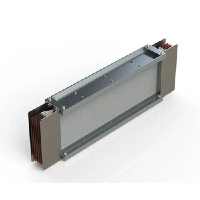
Insulated busbars are used in systems where safety is a priority, especially in high-voltage environments. Insulation prevents accidental contact and enhances safety. Uninsulated busbars, on the other hand, are more commonly used in industrial settings where they can be mounted in insulated enclosures, ensuring safety without sacrificing efficiency.
Materials Used in Busbars
Copper Busbars
Copper is the most common material used in busbars due to its exceptional conductivity, high tensile strength, and durability. Copper busbars can carry higher currents without overheating, making them ideal for high-demand applications. However, copper is relatively expensive and heavy compared to other materials.
Advantages of Copper Busbars:
Excellent conductivity and efficiency
High mechanical strength and durability
Corrosion-resistant properties
Disadvantages of Copper Busbars:
Aluminum Busbars
Aluminum is a lighter and less expensive alternative to copper, though its conductivity is lower (about 62% of copper’s). Aluminum busbars are ideal for applications where weight and cost are crucial factors, though they require a larger surface area to achieve the same conductivity as copper.
Advantages of Aluminum Busbars:
Disadvantages of Aluminum Busbars:
Lower conductivity than copper
Requires larger surface areas for the same performance
Needs special connectors to avoid galvanic corrosion
Comparing Copper and Aluminum Busbars
When choosing between copper and aluminum busbars, several factors must be considered:
| Property | Copper Busbar | Aluminum Busbar |
| Conductivity | Excellent (58 MS/m) | Good (37 MS/m) |
| Weight | Heavy (8.9 g/cm³) | Lightweight (2.7 g/cm³) |
| Cost | Expensive | More affordable |
| Strength | High tensile strength | Lower tensile strength |
| Corrosion Resistance | Excellent | Good (requires protection) |
| Environmental Impact | Moderate (65% recyclable) | High (75% recyclable) |
Which to Choose?
Applications of Busbars
Industrial Applications
Busbars are widely used in factories, power substations, and industrial machinery. They help distribute electricity from transformers to various machines, ensuring a stable and safe power supply.
Example: In manufacturing plants, busbars help distribute electricity to heavy machinery while maintaining efficient and reliable operations.
Commercial and Residential Use
In commercial buildings and residential properties, busbars are used in electrical switchboards and distribution panels to ensure efficient power distribution across lighting, heating, and appliances.
Example: In large commercial buildings, busbars manage the power distribution to different floors, reducing the need for complex wiring systems.
Specialized Uses
Busbars are also used in transportation systems, such as railways and electric vehicles, where they provide a compact and efficient solution for power distribution. In electric vehicles, busbars are used to connect the battery to the rest of the vehicle's electrical system.
Example: Busbars in electric vehicles allow for efficient power flow from the battery to the motors and other electrical components.
Advantages and Disadvantages of Busbars
Advantages
Space-saving: Busbars reduce the need for multiple cables, saving valuable space in electrical enclosures.
Cost-efficient: By consolidating multiple connections, busbars reduce installation time and material costs.
Improved Reliability: The solid connections in busbars are less prone to loosening compared to cables.
Modular and Flexible: Busbar systems can be easily expanded or modified, allowing for easy upgrades or maintenance.
Disadvantages
Initial Cost: The upfront cost of busbar systems can be higher than traditional wiring.
Limited Flexibility: Busbars require fixed layouts and cannot be easily rerouted like cables.
Space Requirements: Depending on the system, busbars may take up more physical space than traditional wiring systems.
Designing and Installing Busbars
How to Design a Busbar System
When designing a busbar system, key considerations include the current rating, thermal management, and the available space. The busbar must be able to handle the required load without overheating, and it should be designed to fit within the designated space while allowing for future expansion.
Installation Best Practices
Proper installation of busbars is essential for ensuring efficiency and safety. Key steps include:
Design Verification: Confirm that the busbar system meets electrical requirements.
Supports and Mounting: Busbars must be securely mounted on insulators or support brackets.
Connection to Equipment: Busbars should be connected to transformers, switchgear, or other devices via proper connectors.
Tip: Always ensure the busbar is securely mounted and properly insulated to prevent electrical faults.
Maintenance Tips for Busbars
Routine maintenance of busbars includes:
Inspections: Regularly check connection points and joints for tightness.
Thermal Scanning: Scan busbar joints under load to detect any hotspots.
Cleaning: Keep busbars free from dust and debris to prevent heat buildup.
Conclusion
Busbars are essential components in modern electrical systems, ensuring efficient power distribution across various applications. Whether in industrial plants, commercial buildings, or electric vehicles, busbars help streamline power flow. Made from copper or aluminum, they come in various forms to meet specific needs.
Busbars increase reliability, save space, and reduce costs, making them a crucial part of electrical infrastructure. Wenzhou Hongmao provides high-quality busbars, offering solutions tailored to diverse power systems, ensuring safety and efficiency.
FAQ
Q: What is a busbar?
A: A busbar is a conductive metal strip or bar used to distribute electrical power across various circuits, minimizing power loss and simplifying wiring.
Q: How does a busbar work?
A: Busbars provide a low-resistance path for electricity to flow, connecting multiple devices or circuits while maintaining consistent voltage and current.
Q: What materials are busbars made from?
A: Busbars are typically made from copper or aluminum, chosen for their high conductivity and durability in electrical systems.
Q: Why are busbars important in electrical systems?
A: Busbars streamline power distribution, enhance reliability, save space, and reduce costs in industrial, commercial, and residential settings.
Q: What is the cost of a busbar?
A: The cost of a busbar varies based on material, size, and application, with copper being more expensive than aluminum.

